Resort Life·Priya Nair·
Resort Life 2026: How to Choose a Resort That Fits

A resort is a small town with a bill attached. Choose it for the room, the food and the walk to the water, not for the lobby photograph.
Key facts
- All-inclusive only saves money if you use what is included.
- Room location can matter more than room category.
- Check the real walk to the beach and the nearest town.
- Ask what the resort fee covers before you book.
A resort sells convenience: everything in one place, paid for in one booking. That convenience is real, but it is also where the money goes. The room, the food, the drinks, the beach and the distance to anything else all affect whether the week feels easy or expensive. Start with how you will spend the days, then choose the property that makes those days simple.
Decide what the resort is for
Some trips need a resort as a base for exploring; others need it as the whole holiday. If you plan to leave every day, a large property with nine restaurants is wasted. A small hotel near the things you want to see will usually be better value. If you plan to stay put, the pool, the beach and the food become the trip.
Families, couples and solo travellers need different things from the same building. A family needs space, shallow water and food that children will eat. A couple may value quiet, a good bar and a room away from the entertainment. A solo traveller may care most about a safe walk and a bar where sitting alone is comfortable.
Do the all-inclusive maths
All-inclusive is a prepaid food and drink budget. It saves money when you would otherwise spend more than the difference, and it costs money when you would not. Compare the all-inclusive rate with a room-only rate plus a realistic daily food and drink estimate for the way you actually eat.
Check what is excluded: premium drinks, specialty restaurants, room service, spa treatments and some activities often cost extra. Ask how many restaurants are included and whether you need to book. A resort with one buffet and a long queue is not the same product as one with four included restaurants.
Choose the room by location, not category
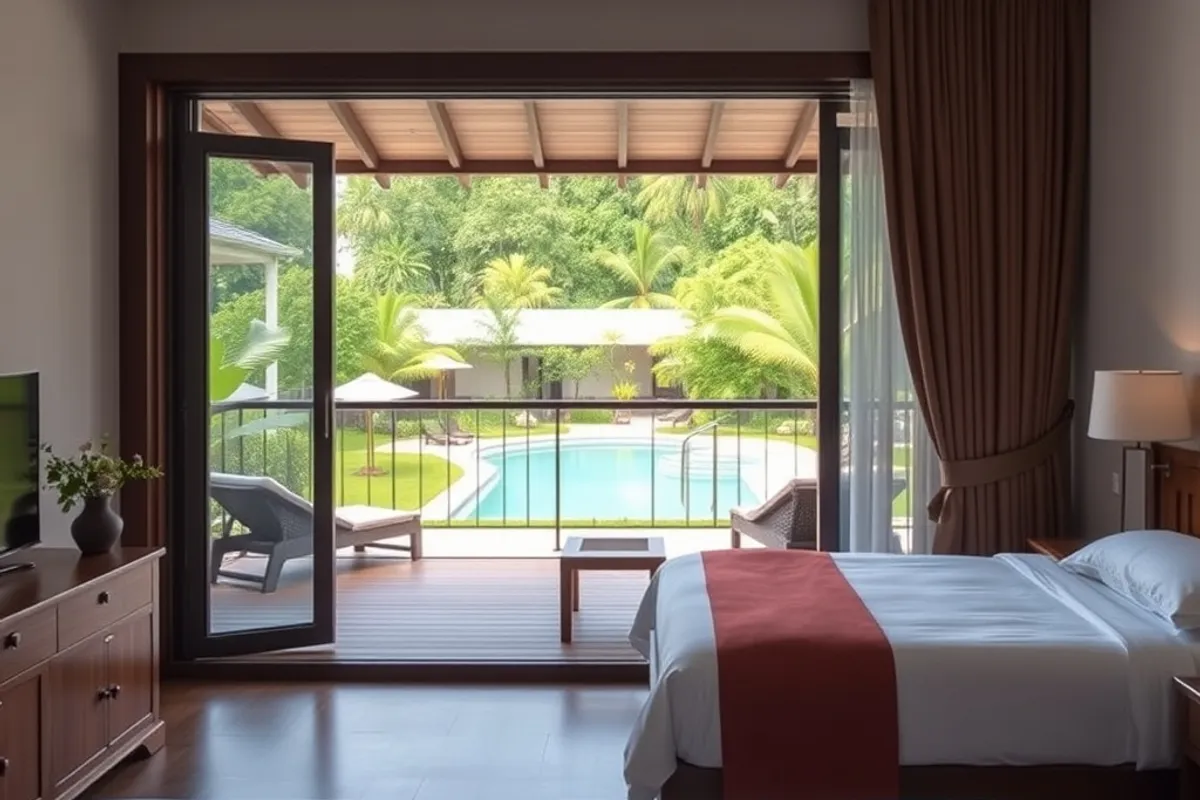
Resort room categories can be confusing: garden, pool, partial sea, sea view, premium. The category matters less than the location. A garden room near the quiet pool may be better than a sea-view room above the entertainment stage. Ask for a map and the distance to the beach, the restaurant and the bar.
If you need quiet, ask for a room away from the pool, the bar and the evening show. If you have mobility needs, ask about steps, lifts and the path to the beach. A resort can be large enough that the wrong room adds a ten-minute walk to every meal.
The best resort room is the one you can reach without a plan and sleep in without earplugs.
Check the beach and the water
A beach photograph can hide a lot: a road between the hotel and the sand, a steep path, a rocky shoreline or a strong current. Look at a map and read recent reviews for the walk and the water. Ask whether the beach is private, shared or public, and whether there are sunbeds and shade.
Tides change the beach. A wide strip at noon can be narrow in the afternoon, and a shallow lagoon can become a long walk to swim. If swimming is the point of the trip, confirm the water access and the season before you book.
Judge the food honestly
Food is the most common resort disappointment. Buffets can be excellent or repetitive, and a la carte restaurants can be booked out for the week. Read recent reviews for variety, freshness and waiting times, not just for the number of restaurants.

Ask about dietary needs before booking. A good resort will answer specifically, not promise to sort it out on arrival. If breakfast is the meal you care about, check whether it is included and whether it ends early.
Understand the fees and the transfer
Resort fees, service charges, city taxes and departure taxes can add a meaningful amount to the bill. Ask what is mandatory and what is optional. A fee for the pool or the gym is still a cost, even if you would rather not think about it.
The transfer is part of the trip. A resort that is two hours from the airport is not convenient for a short stay. Check the transfer cost and the last departure time. If you arrive late, confirm that food is still available and that reception is open.
Look at the service model
A large resort can feel impersonal, while a small one can feel intrusive. Decide which you prefer. Look for reviews that mention how staff handle problems, not only how friendly they are at check-in. A resort that fixes a broken air conditioner quickly is worth more than one with a beautiful lobby.
Ask about housekeeping, towels, beach service and the process for booking restaurants or activities. If everything requires an app or a queue, that is part of the experience. Some travellers love it; others would rather have a person at a desk.

Match the resort to the season
In high season, a resort can be full, loud and expensive. In low season, it can be quiet, cheaper and partly closed. Ask which restaurants, pools and activities are open during your dates. A discounted rate in the rainy season is not a deal if the beach is unusable and the boat trips are cancelled.
Shoulder season is often the best compromise: enough open to feel alive, few enough guests to feel relaxed. Check the weather pattern for the specific coast, not the country as a whole. For broader deal timing, see our travel deal timing guide.
Read the reviews for patterns
One bad review can be an unlucky guest; the same complaint repeated is a pattern. Look for mentions of noise, food, cleanliness, air conditioning and the walk to the beach. A resort that replies well to criticism is often better run than one with perfect scores and no detail.
Ignore the star rating for a moment and read what guests actually did. A four-star resort that suits your routine is better than a five-star one built for a different kind of holiday. The right choice is the one that makes your days easy.

Written by Priya Nair for Judson Desmet. Tips or corrections? Email [email protected].